


Steel Pipe
Why Choose Us
Rich experience
We have at least 10 years of experience in steel product manufacturing and R&D, and accept most customized products of all materials.
Professional team
Our factory has first-class production processes and technological levels to ensure product quality, advanced production equipment and technical team to ensure product production efficiency.
Our Certificate
Our products have passed ISO9001 international well-known certification bodies.
After-sales service
Understand customer's use of products and services and opinions, timely find and solve problems, improve customer satisfaction.
What is Steel Pipe
Steel pipe is a long, hollow cylinder made of steel that is used primarily for transporting fluids and gasses. Unlike tubes, which have a smaller diameter and prioritize precision, pipes are designed to handle high pressure and fluid flow. Its strength, durability, and resistance to harsh environmental conditions make it an essential component in various industries, from construction to oil and gas exploration. Steel pipes are also used in plumbing, heating, and electrical systems due to their robust nature and versatility.


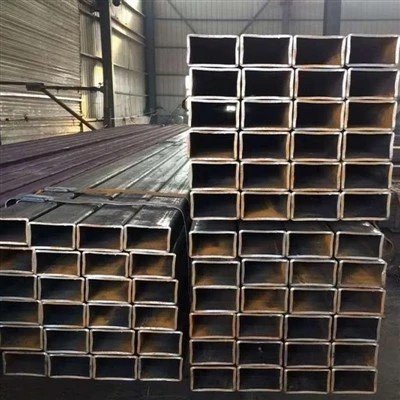


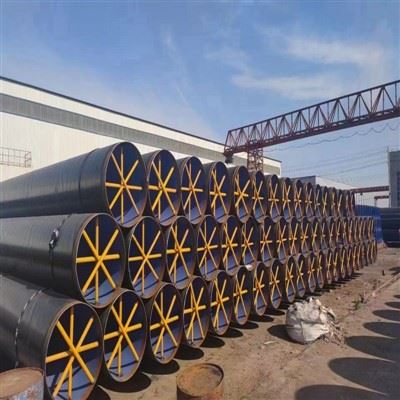
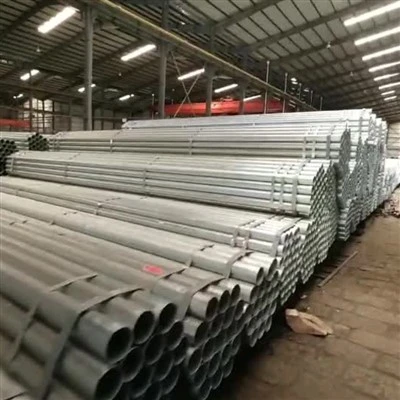


Benefits of Steel Pipe
Steel piping is strong
Tubular steel sections are naturally strong, especially against longitudinal stress, which is why steel tubes are used in applications like scaffolding. Steel tubing and pipes are particularly resistant to length ways compression, but still offer better resistance against bending forces than flat sheet steel.
Steel tubes are hollow
Steel tubing and pipes are not solid cylinders of metal, but have an aperture running their full length – making them an excellent option to protect cables or to carry water and other fluids. Their extra strength means they can be used above ground where the conduit will be exposed to the elements, or buried where they can resist puncturing during any future excavation work.
Steel pipes are light
Of course steel sections will always have a certain amount of weight, but by being hollow, steel pipes and tubing can be lighter than solid structural steel, where total weight is a concern. We have steel piping that starts from just 1.43 kg per metre, ranging right up to our heaviest duty steel tube sections at 411.0 kg per metre.
Steel tubes are consistent
Consistent thickness, diameter and cross-sectional shape along their length mean it is easy to calculate the total weight of any size and length of steel tubes, using basic maths in a matter of moments. We also list typical weights per unit length, making it even easier to calculate the total weight for a given size and thickness of steel pipe just by multiplying the unit weight as listed.
Seamless Pipes
Seamless pipes are generally made in complex steps starting from drilling hollows from billets, by cold drawing and cold rolling processes. To control outside diameter and wall thickness, seamless type dimension is difficult to control compared to the welded tube, cold work improves the mechanical properties and tolerances. The most significant advantage of seamless pipes is that they can be produced in heavy and thick wall thicknesses. Due to their having no weld seam, makes they to be considered as exhibiting better mechanical properties and corrosion resistance than seamed pipes. Also, a better ovality or roundness is expected from seamless pipes. They are generally preferred to be used under extreme environmental conditions as high loading, high pressure, and high corrosivity.
Seamed Pipes
The welded steel pipe is formed by welding a steel plate rolled into a tubular shape by a seam or a spiral seam. Depending on the outer dimension, wall thickness, and application, there are different ways of manufacturing welded pipes. Each method initiates with steel hot billet or flat strips and then made into a pipe by stretching the hot steel billet and forcing the edges together and sealing them with a weld. Seamed pipes offer tighter tolerances but thinner wall thickness rather than seamless pipes. Shorter lead time and lower cost may also be reasons why seamed pipes can be preferred over seamless pipes. However, since weld seam may constitute sensitive areas that may be suitable for any crack to propagate and lead to fracture of the pipe, surface finishing of outside and inside of the pipe should be controlled during production.

Steel Types Used in Steel Pipe
Alloyed Steels
The presence of alloying elements improves the mechanical properties of steel, thus pipes become more resistant to high-stress applications and high pressures. The most general alloying elements are nickel, chromium, manganese, copper, etc. which are present in the composition between 1-50 weight percent. Different amounts of different alloying elements contribute mechanical and chemical properties f the product in varying manners, therefore the chemical composition of steels is also modified accordingly to requirements of applications. Alloyed steel pipes are generally used under high loadings with unstable conditions as in the oil and gas industry, refineries, petro-chemistry and chemistry factories.
Stainless Steels
Stainless steel can also be included in the alloyed steel family. The main alloying element in stainless steel is chromium whose fraction varies between 10-20 weight percent. The main purpose of chromium addition is to make steel gain stainless properties by preventing corrosion. Stainless steel pipes are generally utilized under extreme conditions where corrosion resistance and high strength are vital, as in the marine industry, water purification, medicine and, oil and gas industry. 304/304L and 316/316L are stainless steel grades that can be used in pipe production. While 304 grade has great corrosion resistance and strength; due to low carbon content, 316 series exhibit lower strength and can be welded.
Galvanized Steels
Galvanized pipes are steel pipes that are treated with a zinc coating to prevent corrosion. Zinc coating keeps corrosive substances from corroding the pipe. It was once the most common type of pipe for water supply lines, but because of labor and time that goes into cutting, threading, and installing galvanized pipe, it no longer used much, except for limited use in repairs. These types of pipes are prepared from 12 mm (0.5 inches) to 15 cm (6 inches) in diameter.
Application of Steel Pipe
Structural Usage
Structural use is commonly building and construction in which the building material is commonly referred to as steel tubes. Steel tubes are used to provide additional strength and stability for especially high buildings or constructions. Two types of steel pipes are utilized in structural usage as end-bearing piles and friction piles that both have the aim of transferring the load of the building. In those applications, steel pipes are driven deep into the earth before the foundation is laid, which constitutes great support to the building especially when the ground is not secure. Another structural application of steel pipes is scaffolding poles which allow construction workers to access all areas of the building that are out of reach. They are made by linking steel tubes into each other as a cage that surrounds the building.
Manufacturing Usage
Steel pipes are being utilized for many different purposes in manufacturing use. Guard rails are one of the most common usages to provide a safety feature for stairs and balconies, or, in street, for cyclists and pedestrians. Steel pipes can also be utilized as security bollards which are used to cordon off an area from vehicle traffic to protect people, buildings, or infrastructures. Also, steel pipes constitute an option for outdoor site furnishings. Many commercial bike racks are formed by bending steel tubes. High toughness and strength of steel make it secure against thieves.
Transportation Usage
The most common usage of steel pipes is the transportation of products since the characteristics of the raw material is very suitable for long-term installations. As it has mentioned before, different applications require different properties, as for low-pressure applications it is not expected for a steel pipe to exhibit ultra-high-strength since it does not expose to significant loading. More specialized applications to be used in the oil and gas industry may require more stringent specifications due to the hazardous nature of the product and the possibility of increasing pressure. These requirements bring a higher cost and quality control becomes more critical.
How to Choose Steel Pipe
Materials and Grade
When it comes to steel pipes, the quality of the materials used plays a vital role. Different grades of steel are available in the market, each with its unique characteristics and strengths. It is crucial to determine the specific grade of steel that best suits your requirements. Consider factors such as corrosion resistance, impact strength, and the ability to withstand high temperatures. Consulting with industry experts or reputable steel suppliers can help you choose the appropriate grade of steel pipe for your intended purpose.
Production Process
The quality of steel pipes is greatly influenced by the production process. Reputable manufacturers adopt advanced technology and adhere to strict quality control procedures to ensure high-quality production. When considering a supplier, inquire about their manufacturing process and standards they follow. Look for suppliers who have internationally recognized quality certifications, such as ISO 9001, which ensures that their manufacturing processes meet stringent quality requirements.
Size and Dimensions
Choosing the correct size and dimensions of the steel pipe is essential for its proper functionality. Consider factors such as the pipe's inner and outer diameter, wall thickness, and length. Accurate dimensions are critical to prevent leakages, corrosion, and other structural issues. Always ensure that the steel pipe's size and dimensions comply with industry standards and specifications.
Testing and Inspection
Reliable steel pipe manufacturers conduct rigorous testing and inspection procedures to ensure the highest quality. These tests typically include chemical composition analysis, mechanical properties evaluation, non-destructive testing, and dimensional inspections. Request information from the supplier regarding the specific testing methods they utilize and the standards they follow. It is advisable to choose a supplier that provides documented quality controls and inspection reports for their steel pipes.

Process of Steel Pipe
Raw Material Selection
High-quality steel is chosen based on the intended use of the pipe.Melting and Casting: Steel is melted in a furnace and cast into billets or slabs.
Forming
The billets or slabs are then heated and rolled into a cylindrical shape.
Electric Resistance Welding (ERW)
This is the most common method. Coiled steel sheets are formed into a cylindrical shape and their edges are heated with high-frequency electric current. The molten metal fuses together, creating a strong weld.
Seamless Pipe Manufacturing
For seamless pipes, the billet is pierced to create a hollow tube, then rolled and stretched to the desired size. This method produces pipes with superior strength and is often used for high-pressure applications.
Sizing and Shaping
Pipes are sized and shaped according to specifications through a series of rollers.
Heat Treatment
Pipes undergo heat treatment to improve their mechanical properties.
Inspection and Testing
Pipes are inspected for defects and tested for strength, durability, and compliance with standards.
How to Maintain Steel Pipe
Choosing High-Quality Pipes
Choosing high-quality ones is the foremost thing you should know to have an excellent functioning steel pipe. It is, in fact, the earlier step before you lay the lines on the systems. So, the proper maintenance of your steel pipes starts right from your purchase. Hence, to avail yourself of a quality steel pipe for your industry, research your dealer or supplier thoroughly to find the right one. Bharat Steel, the MS steel suppliers in Chennai, provide the finest steel products for commercial and industrial purposes.
Prevent Metal Contact
Another thing you should know about maintaining the steel pipes is avoiding metal-metal contact. So, it is a matter of planning while laying your steel pipes in the system. The steel pipes should be applied at a sufficient distance from each other to prevent scratches, friction and dents. Nowadays, there are steel pipes delivered by the JSW steel dealers in Chennai which are corrosion-free. However, laying pipes at a certain distance from each other is the best in most cases.
Have A Thorough Inspection
Thirdly, it is always essential that you give a thorough inspection of your steel pipes periodically. The inspection should analyze the factors like corrosion, damage, or rusting of the steel pipes in and out. If you have steel pipes that get affected by these factors, you can find and replace them on your regular inspection with the good ones.For example, the corrosion spreads faster in metals from one pipe to another, eventually damaging your entire system. So, if you change the affected one, you can save the neighbouring pipes from corroding.
Enhancing Pipes Exteriors
After every inspection, you must maintain the steel pipes'appearance by cleaning and polishing. This process has to be carried out to ensure that steel pipes are free from grime and dirt. Hence, it prevents the pipes from being slippery and corrosive. You can ask your steel provider about polishing and cleaning, which suits the pipes and other steel products like MS chequered plates.
Our Factory
We have at least 10 years of experience in steel product manufacturing and R&D, and accept most customized products of all materials.
Our factory has first-class production processes and technological levels to ensure product quality, advanced production equipment and technical team to ensure product production efficiency. Adhering to the business philosophy of "quality first, customer first".We are one of the largest steel exporters in China. The company mainly exports products such as steel pipes, steel plates, carbon steel, galvanized steel, stainless steel, aluminum steel, and steel profiles.
FAQ