


Steel Section
Why Choose Us
Rich experience
We have at least 10 years of experience in steel product manufacturing and R&D, and accept most customized products of all materials.
Professional team
Our factory has first-class production processes and technological levels to ensure product quality, advanced production equipment and technical team to ensure product production efficiency.
Our Certificate
Our products have passed ISO9001 international well-known certification bodies.
After-sales service
Understand customer's use of products and services and opinions, timely find and solve problems, improve customer satisfaction.
What is Steel Section
Steel section, also known as steel sections or structural steel profiles, refer to specific shapes or cross-sectional configurations made from steel. These profiles are commonly used in construction, engineering, and industrial applications for their strength, durability, and versatility. Steel profiles come in various shapes and sizes, each designed to serve specific purposes and provide structural support.


Benefits of Steel Section
High Strength-to-Weight Ratio
Steel Section is not only the most economical structural member, but the sections have a high radius of gyration about both axes which provides high torsional resistance and superior compression performance with significant weight savings. For increased axial capacity, HSS sections can be used as a jacket for a concrete column.
Closed Section
Unlike a channel W or I section which have one or more open sides, hollow structural sections are closed sections with all sides being closed off. This feature of HSS is advantageous for resisting torsional load. Used in environments such as food processing and clean facilities, where cleanliness is required, HSS is the best choice as it minimises surfaces that otherwise may collect dust and debris.
Aesthetic Appeal
Due to their smooth sides, rounded corners, and closed sections, Steel Section are often favoured by architects particularly when exposing the structure forms part of the appeal of a design. HSS have been used in iconic structures such as the London Eye and Emirates Stadium. They are also ideal for everyday applications such as vehicle trailers, fences, and handrails.
Cost Saving
Since rectangular and square Steel Section have about two-thirds the surface area of an open section of comparable capacity, this has a cost-saving benefit as there is less surface to prepare, fewer painting materials are required, cementitious fireproofing can be reduced, and minimal labour is needed.
Sustainable and Adaptable
Hollow structural sections are strong, durable, versatile, reusable and 100% recyclable. Steel Section not only create lightweight and visually attractive structures, but steel structures are inherently adaptable and can easily be extended at a later time without the worry of overloading the foundations of the existing structure.
Types Of Steel Section
I-Beams (or H-Beams)
These profiles have an "I" or "H" shape when viewed in cross-section. They are widely used in building structures, bridges, and heavy machinery due to their high load-bearing capacity and stability.
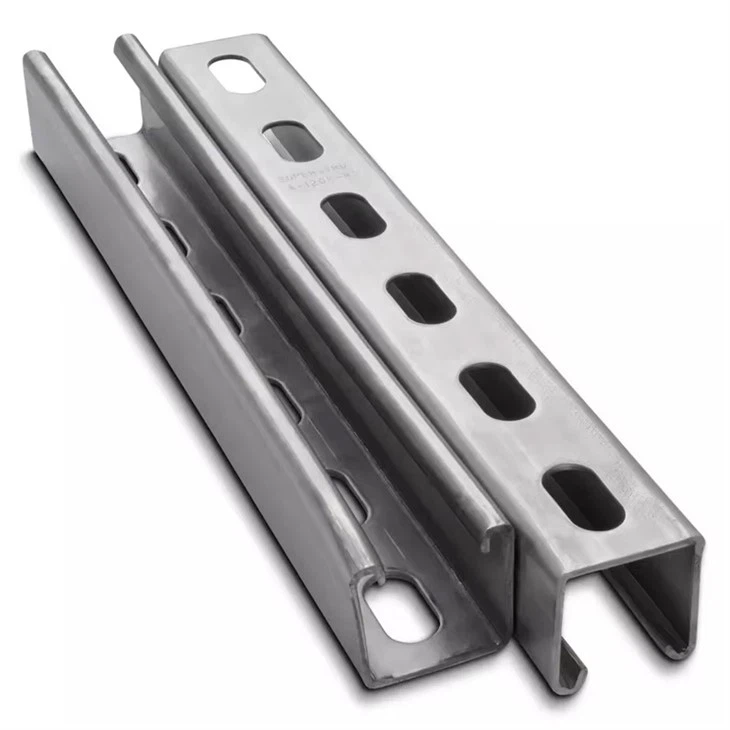
Channels
Channel-shaped steel profiles have a C-shaped cross-section with two flanges and a web at the center. They are often used for structural support, framing, and as tracks for sliding doors or suspended ceilings.
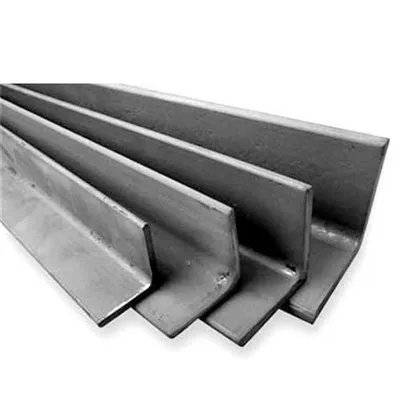
Angles
Angle profiles have an L-shaped cross-section with equal or unequal legs. They are frequently used for corner reinforcement, framework construction, and bracing applications.
Tubes and Pipes
Steel profiles can also include round, square, or rectangular tubes and pipes. These profiles find use in various industries, such as construction, infrastructure, transportation, and manufacturing, for conveying fluids, structural applications, and mechanical purposes.
Flat Bars
Flat bars have a rectangular cross-section and are characterized by their width and thickness. They are commonly used for structural components, frames, braces, and supports.
T-Sections
T-section profiles resemble the letter "T" when viewed in cross-section, with a vertical stem and a horizontal top section. They are employed for structural framework, lintels, and load-bearing purposes.
Z-Sections
Z-sections have a Z-shaped profile, often serving as purlins or girts in steel buildings and roofing systems. They provide structural support and help distribute loads efficiently.
Application of Steel Section
Bridges
Bridges are constructed in numerous different environments, and their configurations can vary depending on where they are built and what they need to accommodate. It will also depend on the type of bridge design. As such, certain grades of structural steel will be suitable for specific builds; each grade offers variations in tension, strength, compression and shear levels.using structural steel is ideal for bridges due to its high yield strength.bridges need to withstand exceptionally heavy loads, and of course, this is why you should use structural steel. Not to mention the fact that steel has excellent resistance to corrosion thanks to various types of steel finishing, which is handy for bridges situated over water.
Transport
Most vehicles contain a sizeable portion of structural steel parts. Steel could be used in many of the internal components or the exterior protective sheets which protect the engine. Steel is used to manufacture trains, rails, trucks, cars and aircraft, with structural steel proving exceptionally popular due to its elasticity, tensile strength, malleability and cost-effectiveness.
Buildings
The vast range of structural steel grades and steel alloys allow it to be used for numerous different building applications. Whether high rise buildings or residential properties, there can always be a use for structural steel beams within a building. It’s particularly useful in the construction of buildings due to how wind-resistant it is, so when it is exposed to extreme conditions, it will only bend, but not snap. This is particularly beneficial for multi-storey buildings.
What Type of Steel Is Steel Section Made Of?

Carbon Steel
All structural steels are considered carbon steel if no other alloying elements are present, the copper content of the steel does not exceed 0.4% to 0.6%, its manganese content is equal to or under 1.6%, and its silicone content does not exceed 0.6%.

High Strength Low Alloy Steel
This type of steel is meant to optimise its mechanical properties and corrosion resistance. These kinds of steel have manganese content which reaches up to 2%. Depending on the intended application, this type of steel may have trace amounts of other elements such as chromium, molybdenum, nickel, nitrogen, niobium, vanadium, and titanium to alter its properties.

Forged Steel
Forging refers to the process of shaping metal (in this case, steel) while it is in a solid state. The process produces a uniform grain structure to the steel, consequently improving its integrity due to removing voids and gas bubbles. Forged steel is any steel that undergoes this process.
Quenched and Tempered Alloy Steel
Quenching and tempering are processes which improve structural steel through the use of heat while also simultaneously cooling it in water, forced air, nitrogen, or oil. The result is a stronger, higher-strength structural steel that is much less brittle.
How to Choose Steel Section
Design requirements
The first factor to consider is the design requirements of your project. These include the functional, aesthetic, and environmental aspects of your structure. For example, you may need to choose steel sections that can support a certain load, span a certain distance, fit a certain space, or match a certain style. You may also need to consider the exposure to corrosion, fire, or seismic forces. The design requirements will influence the type, size, and shape of the steel sections that you can use.
Material properties
The second factor to consider is the material properties of the steel sections. These include the strength, ductility, toughness, and weldability of the steel. Different steel grades have different material properties that affect their performance and suitability for different applications. For example, you may need to choose a high-strength steel for a long-span bridge, a ductile steel for a seismic-resistant building, or a weldable steel for a complex connection. The material properties will influence the grade, thickness, and quality of the steel sections that you can use.
Section properties
The third factor to consider is the section properties of the steel sections. These include the geometric and mechanical properties that determine the resistance and stiffness of the sections. For example, the cross-sectional area, the second moment of area, the radius of gyration, and the section modulus are some of the common section properties that are used in structural analysis and design. The section properties will influence the capacity, deflection, and buckling of the steel sections that you can use.
Select a section type
The first step to select the most appropriate steel sections is to choose a section type that meets your design requirements and material properties. There are many types of steel sections available in the market, such as I-sections, H-sections, C-sections, L-sections, T-sections, tubes, bars, and plates. Each type has its own advantages and disadvantages in terms of strength, stiffness, weight, fabrication, and connection. You can use online databases, catalogs, or software tools to compare and select the best section type for your project.
Step 1: Making the Iron
Steel is a metal alloy made of iron and carbon. Thus, the steel manufacturing process starts by making iron. To do this, limestone, coke, and iron ore are combined and put into a blast furnace. The elements are melted together to create a hot metal known as molten iron.
Step 2: Primary Steelmaking
The second step of the steel manufacturing process can be completed with two different pieces of equipment: a basic oxygen furnace and an electric arc furnace. With a basic oxygen furnace, the molten metal produced in step 1 is infused with scrap steel. Then, oxygen is forced through the furnace to remove the impurities in the molten iron. With an electric arc furnace, as the name suggests, electricity is forced through the furnace to purify the iron. The completion of step 2 results in raw steel.
Step 3: Secondary Steelmaking
Just like there are different grades and families of stainless steel, there are also different types of regular steel. The different grades are determined by the elements that remain in the metal at the completion of the manufacturing process. Secondary steelmaking refines the composition of the steel to create the desired grade. This is done with different techniques such as stirring and ladle injections.


Step 4: Casting
During the fourth step of steel manufacturing, molten iron is cast into molds for cooling. This process starts to set the shape of the steel and causes a thin, hard shell to form. The strands of the shell are malleable and can be worked into the desired shape of flat sheets, beams, wires, or thin strips.
Step 5: Primary Forming
Primary forming continues the shaping process. A hot roller is used to fine-tune the casting. The steel is molded into the desired shape and surface finish. Some examples include bloom, billet, and slab.
Step 6: Secondary Forming
The final step of the steel manufacturing process creates the final shape and properties of the steel. Secondary forming is accomplished with different methods such as shaping (cold rolling methods), machining (drilling), joining (welding), coating, heat treatment, and surface treatment. At the completion of step 6, the steel is fully shaped, formed, and ready for use and processing in various applications.
How to Maintain Steel Section
Passive Barrier Protection
In this process, the Steel Section is coated with a protective coating containing water, ions, and oxygen. The less penetrable the coating system is, the better is the protection. Providing a two-pack epoxy coating and a chlorinated rubber at a high film ensures better protection of the steel against corrosion.
Active Protection
In this process, the pre-engineered building manufacturers in India use a primer that contains a reactive compound. This is applied directly to the steel which disrupts the formation of anodes on the steel surface. The zinc inhibitive primitives act as anti-corrosion substances. Zinc phosphate is partially soluble in water and produces zinc ions and phosphate ions. These phosphate ions render the steel passive and the zinc ions work as cathodic inhibitors.
Sacrificial Protection
The sacrificial process, also known as Galvanic Protection is one of the most effective ways to prevent corrosion of mils steel plates according to steel dealers in India. Here, two dissimilar metals react together to act as protection. Zinc is the best way to avoid corrosion or at least lower the effect. When the zinc metal when in direct contact with the steel, it develops protection through the oxidation of zinc metal. This process can be further improved in the presence of ions like chlorides, especially in coastal areas.
Our Factory
We have at least 10 years of experience in steel product manufacturing and R&D, and accept most customized products of all materials.
Our factory has first-class production processes and technological levels to ensure product quality, advanced production equipment and technical team to ensure product production efficiency. Adhering to the business philosophy of "quality first, customer first".We are one of the largest steel exporters in China. The company mainly exports products such as steel pipes, steel plates, carbon steel, galvanized steel, stainless steel, aluminum steel, and steel profiles.
FAQ