Scaffold
Your Professional Scaffold Supplier
Tianjin Kun Yu Technology Co., Ltd. is one of the leading steel exporters in China. The company specializes in exporting a wide range of steel products, including steel pipes, steel plates, carbon steel, galvanized steel, stainless steel, aluminum steel, and steel profiles. These products are primarily utilized in various sectors of the national economy, such as the chemical industry, machinery, construction, public utilities, shipping, oil, and others.
Customized Services
With over a decade of experience in the manufacturing and R&D of steel products, we offer comprehensive customization services for a variety of materials to meet specific customer requirements.
High-Quality Products
Our factory employs state-of-the-art production processes and advanced technology to ensure the superior quality of our products.
High Productivity
Equipped with cutting-edge production facilities and a highly skilled technical team, we guarantee efficient production to meet customer demands promptly.
Excellent After-Sales Service
We provide exceptional after-sales service, addressing customer complaints and resolving issues effectively to ensure customer satisfaction.


Parameter
|
Grade |
Q235, Q235B, S275, S275jr, A53, st37, etc |
|
Material |
Q195 / Q235 / Q345 |
|
After-sale Service |
Online technical support |
|
Size |
Single Width 0.75m, Double Width 1.35m |
|
Height |
3 m- 12 m for option |
|
Safety Load capacity |
5 Ton/ vertical standard |
|
Surface |
Pre-galvanized steel pipe: 60-120G/M2 |
|
Main Market |
Southeast Asia, South Asia, the Middle East, Middle South America, Africa, and Oceania |
|
Main Part |
Standard, Ledge, Brace |
|
Color |
Silver, blue, yellow, or as you require |
Types of Scaffold
The scaffolds produced by our company mainly include the following types:
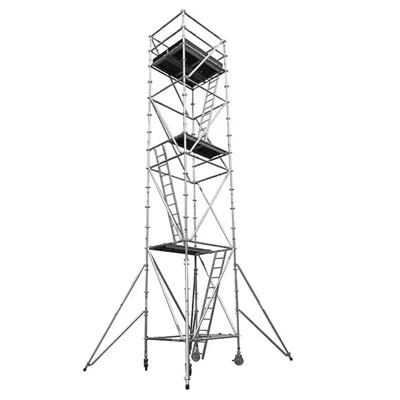
Industrial Tower Scaffold
Industrial Tower Scaffold is a standardized temporary support system designed for aerial work. It is mainly composed of key components such as galvanized steel portal frames, cross supports, connecting rods, horizontal frames, locking arms, etc.
Minimax Scaffold Tower
Minimax Scaffold Tower is a professional scaffolding tower made of high-quality steel. It is mainly composed of steel pipes, fasteners, and their supporting accessories, including horizontal crossbars, vertical poles, connecting wall parts, bases, and various supporting structures, forming a stable multi-layer and multi-span spatial structure system through precise assembly technology.

Advantages of Scaffold
Improves Access
Especially in high-rise and mid-height buildings, scaffolding is important to provide construction workers with easy access to different parts of a building. Most scaffolding types also include stairways or access-ways in order to allow works to reach the designated building level.
Better Worker Safety
Construction sites are riddled with safety risks and hazards. This is why on-site personnel is always required to be mindful of these risks, wear the right protective equipment, and make use of sturdy structures. Apart from improving the ease of access to different parts of a building, scaffolding is also crucial in ensuring working safety.
Sturdy
Although variations of scaffolding exist, there are several main components that are always present. These are the standards, ledgers, scaffold tubes/pipes, couplers, decks, railings, stairways, braces, and base plates. On their own, these components already have a number of useful properties. Combined all together, however, they create a simple, yet incredibly sturdy framework that makes the scaffolding a reliable addition to any construction site.
Easy to Assemble
Construction projects are always a race against time. In fact, several factors may lead to the delay of a construction project, such as improper budget planning, inadequate resources, hazards, lack of permits, or limited manpower. To avoid these delays, construction managers have to see to it that every aspect of the project is accounted for, even something as small as the scaffolding.
Cost-Effective
Scaffolding is made out of affordable and readily-available materials, making them one of the most cost-effective solutions for any construction job. Steel scaffolding in particular provides more value to the industry because of its strength and budget-friendliness. Compared to other materials like wood or aluminum, steel is far cheaper (by the pound) and is specifically designed to withstand heavy loads.
Applications Of Scaffold

Construction & Building Projects
Construction scaffolding is the most widely used type, supporting workers as they perform tasks such as:
Bricklaying and masonry – Ensures stable work platforms for laying bricks and applying mortar.
Painting and plastering – Allows painters to access high walls and ceilings safely.
Roofing and siding installation – Provides secure footing for exterior work.
Structural repairs and maintenance – Used for reinforcing buildings or making upgrades.
Industrial & Maintenance Work
Industrial scaffolding is often used in power plants, oil refineries, and manufacturing facilities for:
Equipment maintenance and repairs – Scaffolding provides safe access to large machinery.
Welding and pipefitting – Essential for installing or repairing industrial piping.
Cleaning and coating applications – Helps in painting or applying protective coatings to equipment.


Event Staging & Entertainment
Scaffolding is commonly used in the entertainment industry to build:
Concert stages – Supports lighting, sound systems, and performance areas.
Temporary seating – Creates multi-level seating arrangements for large events.
Camera platforms – Provides elevated vantage points for filming and broadcasting.
Scaffolding for events must be easy to assemble and disassemble, with a strong emphasis on stability and weight-bearing capacity.
Infrastructure & Public Works
Government and infrastructure projects rely on scaffolding for:
Bridge construction and repairs – Scaffolding is used for both support and worker access.
Utility maintenance – City maintenance crews depend on scaffolding for safety.
Highway projects – Used for sign installation and roadwork requiring elevated access such as under bridges.

Steps to Build Scaffold
Set up the Base
The subsequent stage involves the establishment of the base for the scaffolding. This involves securing the base plates, levelling the scaffolding, and installing the sole boards. The base plates are positioned on the surface to evenly distribute the weight of the scaffolding.
Erect the Standards
The standards, also known as the vertical poles, are then erected and secured to the base using couplers or clamps. The standards should be installed at a distance of no more than 2.4 metres apart and should be plumb and straight.
Install the Ledgers
The ledgers are horizontal poles that connect the standards and provide support for the scaffolding. The ledgers are installed at a distance of no more than 1.8 metres apart and should be level and straight.
Install the Transoms
Transoms are horizontal poles that run perpendicular to the ledgers and provide additional support for the scaffolding. The transoms are installed at a distance of no more than 1.2 metres apart and should be level and straight.
Install the Braces
Braces are diagonal poles that provide additional support and stability to the scaffolding. The braces are installed in an X-shaped pattern between the standards and should be securely connected to both the standards and ledgers using clamps or couplers.
Install the Platforms
The platforms are the working surfaces of the scaffolding and are installed on top of the ledgers and transoms. It is crucial that the work surfaces, known as platforms, are positioned at a maximum distance of 3 metres from each other, guaranteeing that they are level and securely fixed in place.
Secure the Scaffolding
It is crucial to secure the scaffolding to the building or structure following its assembly to avoid potential collapses or shifting. This can be accomplished by using tie-ins, which are ropes or cables anchored to the building or structure and connected to the scaffolding.
Inspect and Test the Scaffolding
Prior to initiating work on the scaffolding, it is highly critical to examine and evaluate it for safety and stability. A certified inspector can conduct this task by thoroughly examining the scaffolding for any defects or vulnerabilities, and verifying that all its constituents are appropriately installed and fastened.
Storage Precautions for Scaffold
Moisture is a significant enemy of scaffolding material, as it can lead to rust and corrosion. Of course, high quality scaffolding material that has been hot-dip galvanized during production, for example, can easily withstand some rain and humidity. Nevertheless, it’s always a good idea to store scaffolding parts that are more suspectable to damage from too much moisture like wooden scaffold planks or toeboards, in a dry, sheltered area, such as a warehouse or covered storage space.
When things have to move fast, caution sometimes comes up short. One or the other scaffolding part can then be moved rather roughly when bringing is back to your yard. Fortunately, steel can withstand a lot, but such actions can still result in bending or other damage to scaffolding parts. So that such avoidable damage to your scaffolding material does not affect your finances later on, make sure that the step of storing material is carried out with the necessary care.
Packaging and Shipping
|
Packaging |
Foam paper or wooden box packaging, according to your needs. |
|
Shipping |
Transported by DHL, UPS, EMS, Fedex, SF, by Air, by Sea. According to customer requirements |
Our Factory
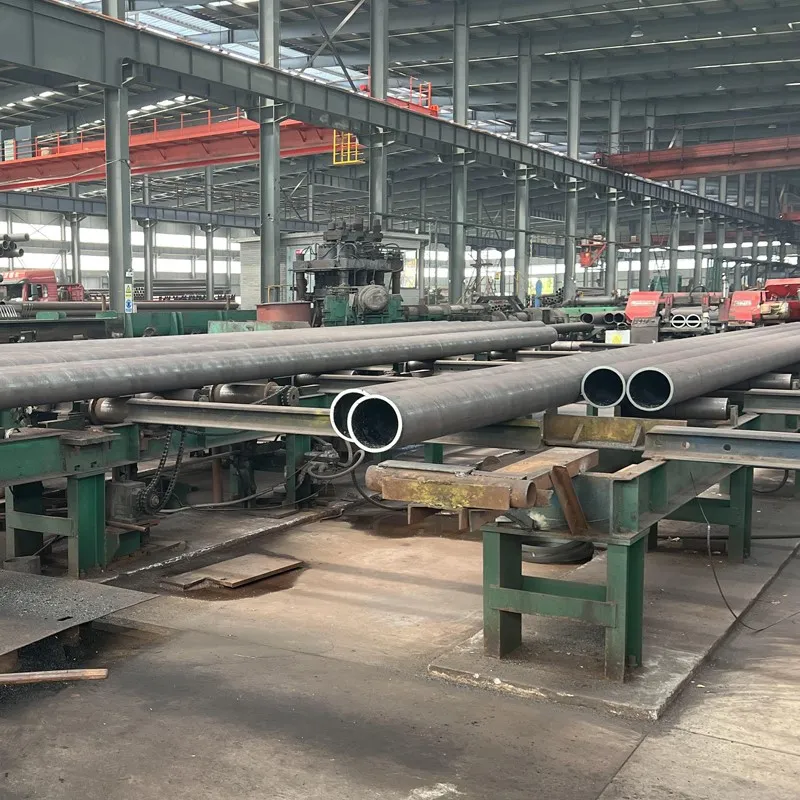
Tianjin Kun Yu Technology Co, Ltd. is located in Beichen District, Tianjin, China, is a production and trading integrated enterprise, focusing on the field of steel materials. Our steel plant covers an area of 150,000 square meters, with spacious production workshops and advanced storage facilities, the plant covers an area of 128 employees, and builds a well-structured, professional and complementary team structure.
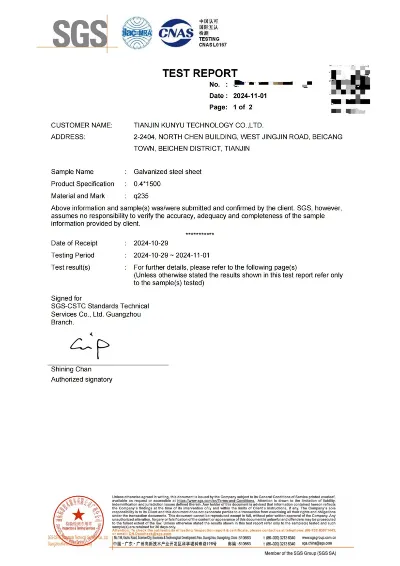
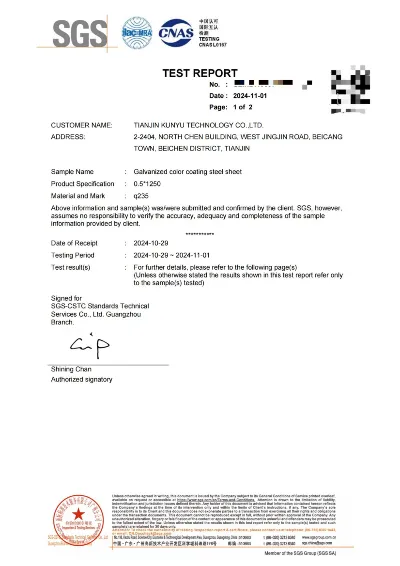
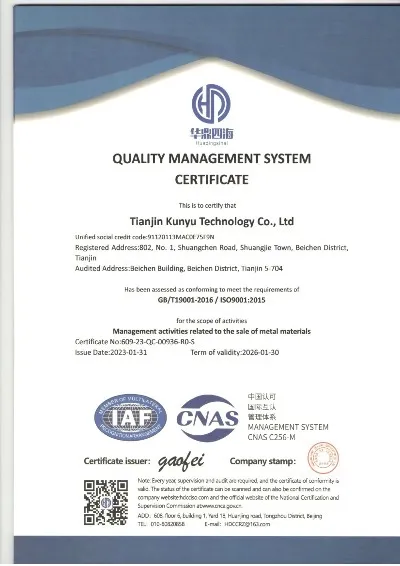
Our Certificate