


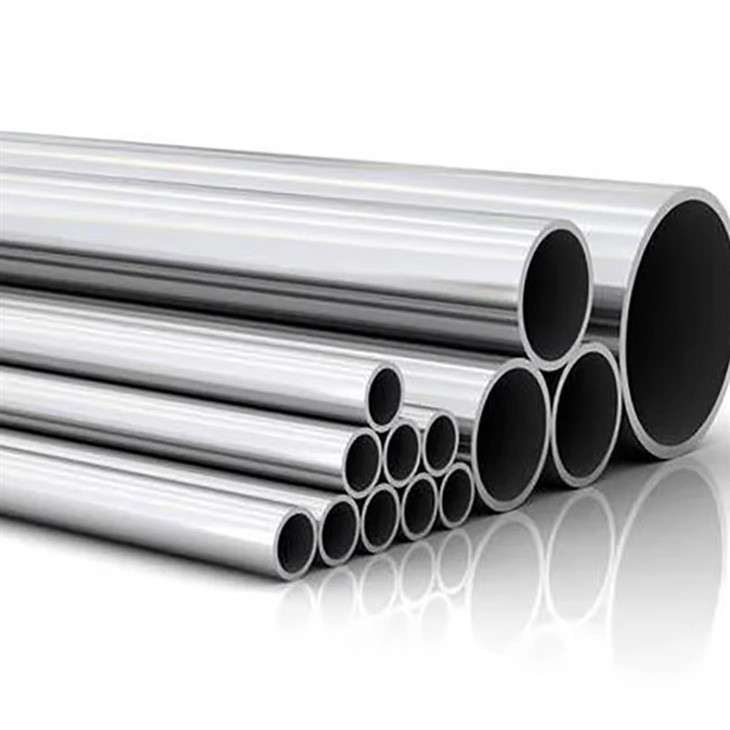
Stainless Steel Pipe
Why Choose Us
Rich experience
We have at least 10 years of experience in steel product manufacturing and R&D, and accept most customized products of all materials.
Professional team
Our factory has first-class production processes and technological levels to ensure product quality, advanced production equipment and technical team to ensure product production efficiency.
Our Certificate
Our products have passed ISO9001 international well-known certification bodies.
After-sales service
Understand customer's use of products and services and opinions, timely find and solve problems, improve customer satisfaction.
What is Stainless Steel Pipe
Stainless Steel Pipes play a vital role in numerous industries, and it is essential that the right grade of Stainless Steel Pipe be chosen for the right job. There are three main Stainless Steel grades-304, 316, and 317. Each grade has its own unique properties which make them ideal for different applications. When choosing SS pipes, it’s important to consider the application as each grade has unique properties that make them suitable for different uses. If you have questions about Stainless Steel pipe and their grades, contact your local supplier for advice on how to choose the right Stainless Steel pipe for your project.


Benefits of Stainless Steel Pipe
Stain and corrosion resistant
Corrosion is the main enemy of metal piping. The outer surface of steel, iron and concrete piping can degrade from soil and UV light.Interior walls of piping made from other materials will tend to rust, are damaged through abrasion, or accumulate debris. But thanks to the corrosion resistance properties of stainless steel, this is far less common.This gives stainless steel the edge when it comes to applications like sanitary water delivery or hospital applications.
Value
When you use stainless steel pipes, you are buying a durable product that will last your business for decades. It is a reliable material that is easy to maintain and install. Stainless steel is low-maintenance, and due to its corrosion-resistant properties, it is unlikely they will need to be replaced for decades.
Strength and versatility
Different materials such as nickel, molybdenum, or nitrogen can be added to stainless steel to enhance its corrosion-resistant properties. Stainless steel can handle extreme temperatures. By adding different materials to stainless steel allows for thinner pipe walls and less material which means less added weight to the finished product making it ideal for many commercial and industrial uses.
Environment-friendly
Stainless steel is not a petroleum product. In fact, it doesn't need to be coated or lined with any materials at all, unlike other piping materials. When you need to replace or dispose of stainless steel piping, it is 100% recyclable, reducing the environmental impact. As much as 50% of all new stainless steel that is produced in the United States is made from recycled scrap metal.
Types of Stainless Steel Pipe
Seamless Pipe
A seamless pipe has no weld connections or seams. It can tolerate high or low temperatures as well as pressure. All of the tanks are filled to the brim with metal. Stainless Steel Seamless Pipes are used in a wide range of applications, including gas and oil applications. They're also used in the mechanical and engineering fields. This is what makes it adaptable before it reaches the consumer; it has been thoroughly inspected to ensure high-quality assurance.
Welded Pipe
Welded pipes are employed in almost every industry due to their versatility. However, they are more expensive when it comes to providing strong corrosion resistance and hence resisting pressure. Because of the type of material utilized, the welded pipes are lightweight. When it comes to paying your money, they are more cost-effective than other pipe techniques.
Pipe Flanges
These Pipe flanges are another crucial component of the entire piping system. Pipe flanges come in a variety of styles, including threaded, semi-s, lap joints, and blinds. They are made of solid and long-lasting materials, ensuring a high-quality product with the highest level of dependability.
Characteristics of Stainless Steel Pipes
Resistance to Corrosion
Almost all stainless steel 304 pipes on the market are made of iron-based alloys containing at least 10.5 percent chromium. When an alloy contains chromium, a self-healing or protective oxide layer forms on the surface. The corrosion resistance of stainless steel pipes is due to the creation of an oxide layer. The oxide layer's self-healing properties suggest that corrosion resistance may be maintained independently of production methods.
Low-Temperature Cryogenic Resistance
Toughness or ductility at sub-zero temperatures is used to test cryogenic resistance at low temperatures. The tensile strength of authenticating stainless steel is much higher at cryogenic temperatures when compared to ambient temperatures. In addition, they can sustain outstanding toughness in adverse conditions.
Work Hardening
One of the most notable advantages of work hardening stainless steel pipe grades is that it considerably improves mental strength and aids in cold working. It's simple to use a mix of annealing and cold working processes to give produced components the strength they need.
High Strength of Stainless Steel Pipes
At peak or extreme temperatures, high strength can be maintained. Nitrogen is responsible for the hot strength in stainless steel pipe grades that include a lot of chromium or silicon. The grades of chromium terrific can be given with high hot strength. At peak or extreme temperatures, the stainless-steel pipe with a high chromium content aids in scaling resistance.
Application of Stainless Steel Pipe
Oil and Gas
Technology plays a massively important role in the oil and gas industries. The need for corrosion-resistant piping has increased over the past couple of years as the depths we explore for oil deepens and more pressure is being placed on the duplex and super duplex stainless steel pipes we use. These harsh environments can be incredibly corrosive and if the damage is left unchecked, the pipes would easily burst and become unusable for deeper depths. This is why it's important to have sturdy pipes in the oil and gas industry and how it plays such a huge role in the success of this industry.
Nuclear Power
Obtaining usable energy from atomic nuclei is no easy task. All of the nuclear reactors we use today heat water to produce steam which is then used to spin turbines that provide us with energy and most of them are placed near the coast due to the cooling requirements. As such, much of the water being pumped in to cool down these reactors is from the sea, and it needs to be resistant to the corrosive nature of seawater. Stainless steel pipe is more than qualified to defend against corrosion from seawater, hence its importance in the nuclear power industry.
LNG
LNG (liquefied natural gas) is gas that has been temporarily converted into a liquid form for the sake of transportation. Its volume is greatly reduced to make it easier and cheaper to transport. In some cases, transporting natural gas via pipelines isn't possible or cheap enough to be worth the cost, which is why it's instead transported via a liquid form in cryogenic sea vessels and road tankers. As such, it's important to have the right piping that provides safe and economical LNG transport to deliver natural gas to parts of the country or world that are difficult to reach.
Desalination
Desalination is the removal of salt and other minerals from a source of water. This is done to convert water into fresh water that is fit for humans to use or possibly irrigation. In most cases, salt is created as a by-product and desalination are used on many submarines and ships. Today, desalination is typically spoken about when attempting to bring fresh potable water to regions of the world where it is difficult. Saltwater and metals generally don't mix very well, hence the importance of getting piping in the desalination industry that is able to withstand the natural corrosive properties of salt water.
Mining and Minerals
Mining is the process of extracting materials from the earth. The materials covered are usually in the form of metals both common and precious and it's something that has been done for thousands of years to acquire beneficial resources. The mining industry is one where stainless steel has made it easier and more profitable to take on larger operations. Whether it's used in the actual mines itself where workers and machines dig at the earth, or in the bunk beds and mess halls where staff sleep, it's used in a variety of different applications to provide safety and reliability.
Different Grades of Stainless Steel Pipe
SS 304 Pipes
SS 304 Pipes are popularly known as the “18/8” or “18/10” stainless steel because they contain 18% chromium and 8%-10% nickel respectively. This type of Stainless Steel pipe is highly corrosion-resistant due to being stabilized with titanium and molybdenum. It can also withstand temperatures up to 1,500°F which makes it perfect for general use. These pipes are available in various sizes and shapes, including SS seamless Pipes, which are perfect for food processing applications.
Stainless Steel 316 Pipes
The Stainless Steel 316 Pipe is a higher grade compared to 304 Stainless Steel. It contains 2%-3% molybdenum in addition to chromium and nickel, which makes it highly corrosion-resistant, especially against chloride-ion solutions such as salt water. This type of Stainless Steel pipe is ideal for marine and coastal environments where there’s potential for corrosive liquids.
SS 317 Pipes
Finally, the Stainless Steel 317 Pipe is an austenitic stainless steel designed to withstand aggressive environments with high temperatures and concentrations of sulfuric acid. It contains additional elements like molybdenum, nickel, and chromium which give it the ability to maintain its integrity even under intense temperatures. Stainless Steel Seamless Pipe is commonly used in chemical processing applications and can withstand temperatures of up to 2,500°F.
How to Choose Stainless Steel Pipe
While purchasing a pipe fitting one should be extremely aware and careful of the quality of the metal provided. Always look for the best quality material with ISO markings and validations. Check the strength, durability, and corrosion resistance of the material. Make sure the fitting is perfect according to the OD and ID of your pipeline. The use of low-quality materials poses a threat to the entire hardware or pipeline. Low-quality material tends to get affected by corrosive particles easily which affect the whole system. If you choose to use 316 grade stainless steel pipe fittings, always check for ISO 9001: 2000 marking.
Always buy your fittings from renowned and well-known manufacturers. Ask the sellers for a dummy or a test product to know the exact working of the product. Always make sure that the fittings manufactured are at par with all global and international standards. Ask for test reports and quality assessment reports from the buyer. Following these steps ensures that you won’t be handed a faulty product.
Every well-renowned manufacture makes it a point to test the products manufactured by their team. The buyers should be well aware of the tests conducted on the fitting. The fittings should pass all the criteria set b international norms and standards.
When evaluating a fitting and its certifications, make sure they’re globally recognized. Several essential markings that need to be there on certification include:
ATEX 94/9/EC
PED 97/23/EC
ISO 9001:2008
ISO 22000:2005
Process of Stainless Steel Pipe

Rotary Piercing and Rolling
Rotary piercing and rolling are produced when the stainless steel material of a proper weight, diameter, and grade is heated to a suitable forging temperature. The steel is then pierced and worked on with several types of mills. Doing so causes the heated material to flow around a piercer point resulting in a hollow billet, which is then roller elongated in a succession of mills. A mandrel or plug forms the tubing’s internal support; elongated tubing can be further sized by rolling without internal support.
Extrusion
As with rotary piercing and rolling, extrusion processes begin with stainless steel of the desired grade, diameter, and weight. The extrusion process is ideal for forming long-length, seamless stainless steel coil tubing. It provides the most concentric ID (inside diameter) and uniform OD (outside diameter). Beginning as a hot extruded seamless pipe, the raw material is first cold reduced and then processed through cold pilger into long straight forms.Cold pilgering is a cold-rolling, longitudinal process that works the tubing to the desired dimensions (OD, ID and wall thickness) in one step. During cold pilgering there is hardly any loss of material. But for the end facing of the tubes that need to be finished or cut off.
Final Processing & Fabrication
Once the cold reducing has been performed, the stainless steel tubing is annealed to remove any possible internal stresses and restore the material’s crystalline structure for further cold working. Annealing also softens the cold-worked and brittle material to return its ductile properties.
5 Tips For Cleaning Stainless Steel Pipe
Routine Cleaning
To carry out routine cleaning of stainless steel tubes, you can clean them with soap, mild detergent, or ammonia solutions in warm water. You can apply any of these agents with a soft cloth or nylon sponge. After this, you need to rinse and dry it with a soft cloth. It helps to remove ordinary soiling. While cleaning stainless steel, use mild non-scratching abrasive powders, and avoid using standard carbon steel brushes or steel wool. It can leave articles embedded on the surface, which can trigger rusting.
Solvent Cleaning
You can use organic solvents to remove stains that are fresh and have not yet oxidized or decomposed. The solvent should not contain chlorine, like acetone, methyl alcohol, and mineral spirits. You can immerse smaller articles into the solvents or use the vapor cleaning method to control the discharge of solvents. Wipe it post-cleaning.
For Moderate Soiling
You can use a mild abrasive cleaner for moderate soiling and light staining and use a soft cloth, nylon scouring pad, or a soft bristle brush. In the direction of the polished finish, use the material to make long, even strokes. You need to avoid using a circular rubbing action. After you clean it, you need to rinse and dry-wipe to complete the process and remove water stains.
For Heavier Soiling
For more intense staining and heavy soiling, you can use ammonia solution or warm/hot detergents. You can also use acidic cleaners and follow the cleaning procedures mentioned for moderate soiling.
Passivating Treatment
To maximize the corrosion resistance capability of stainless steel and remove surface contaminants, you can use the passivation treatment. First, you need to clean the stainless steel surface thoroughly and remove the pollutants. After this, you need to enter the metal in a passivating acid bath. Depending on the chromium content and the machinability properties of the stainless steel grade, the nature of the passivation treatment will vary.
Our Factory
We have at least 10 years of experience in steel product manufacturing and R&D, and accept most customized products of all materials.
Our factory has first-class production processes and technological levels to ensure product quality, advanced production equipment and technical team to ensure product production efficiency. Adhering to the business philosophy of "quality first, customer first".We are one of the largest steel exporters in China. The company mainly exports products such as steel pipes, steel plates, carbon steel, galvanized steel, stainless steel, aluminum steel, and steel profiles.
FAQ